EP 11.《Back to Brno: From Kitchen to Norwegian Forest》
Kitchen Survival
Back in Brno, a light drizzle was still falling, and I secretly felt relieved that my plans had been canceled. Trudging back to the dormitory on the No. 9 tram, I knew I still had to face my housing crisis.
After falling victim to a rental scam in Poland, I found another exchange student to apartment-hunt with, but he eventually secured a dorm spot, leaving me back at square one. Soon after, I encountered a group of Norwegian students in an exchange group looking for a roommate to fill a vacancy left by someone who had stayed in Norway for work.
During my first few days back, I drifted from my room to the hallway, eventually settling in the dormitory kitchen. My room felt like a battlefield, making sleep impossible. I tried the U.S. military’s “2-minute sleep method,” though I haven’t even served my conscription yet; having missed every target during school shooting practice, I possessed zero wilderness survival skills. Armed with a sleeping pad, a sleeping bag, and an inflatable pillow, I lived in that kitchen for nearly a week. Despite people passing through in the dead of night, I slept surprisingly well, gradually adjusting to Europe’s particular brand of “weirdness”.
Idle for a week, I spent my days watching League of Legends matches and dodging tram fares to visit a local music store. It was the only large instrument shop in Brno, and I was searching for a guitar to pass the time over the coming year. They stocked many PRS models—roughly 5,000 TWD cheaper than in Taiwan—but I eventually found the Gretsch semi-hollow body I had been seeking, a brand nearly impossible to find back home.
I met my prospective roommates for brunch at Kafec—perhaps a trial to see if I was too “strange” to live with. Waiting for the “couple” at the door, I was stunned to realize they were a lesbian couple. It had never crossed my mind that I would be living with two women. They were incredibly friendly, their dynamic feeling more like close friends than partners. When I recounted my week in the kitchen, they didn’t find me odd; instead, they thought it was cool and hilarious. Fortunately, my past travels made my English flow more naturally. We walked to their apartment near the industrial zone, a 30-minute commute to school; the meeting was pleasant, though they didn’t commit immediately.
That night, they gave me the green light. After a few more nights in the kitchen waiting for the contract to be updated, I boarded the No. 9 tram with all my worldly possessions. It was raining again. Luck finally ran out when a ticket inspector caught me, resulting in a 1,000 CZK (approx. 1,400 TWD) fine.
Arriving at “Norwegian Forest”
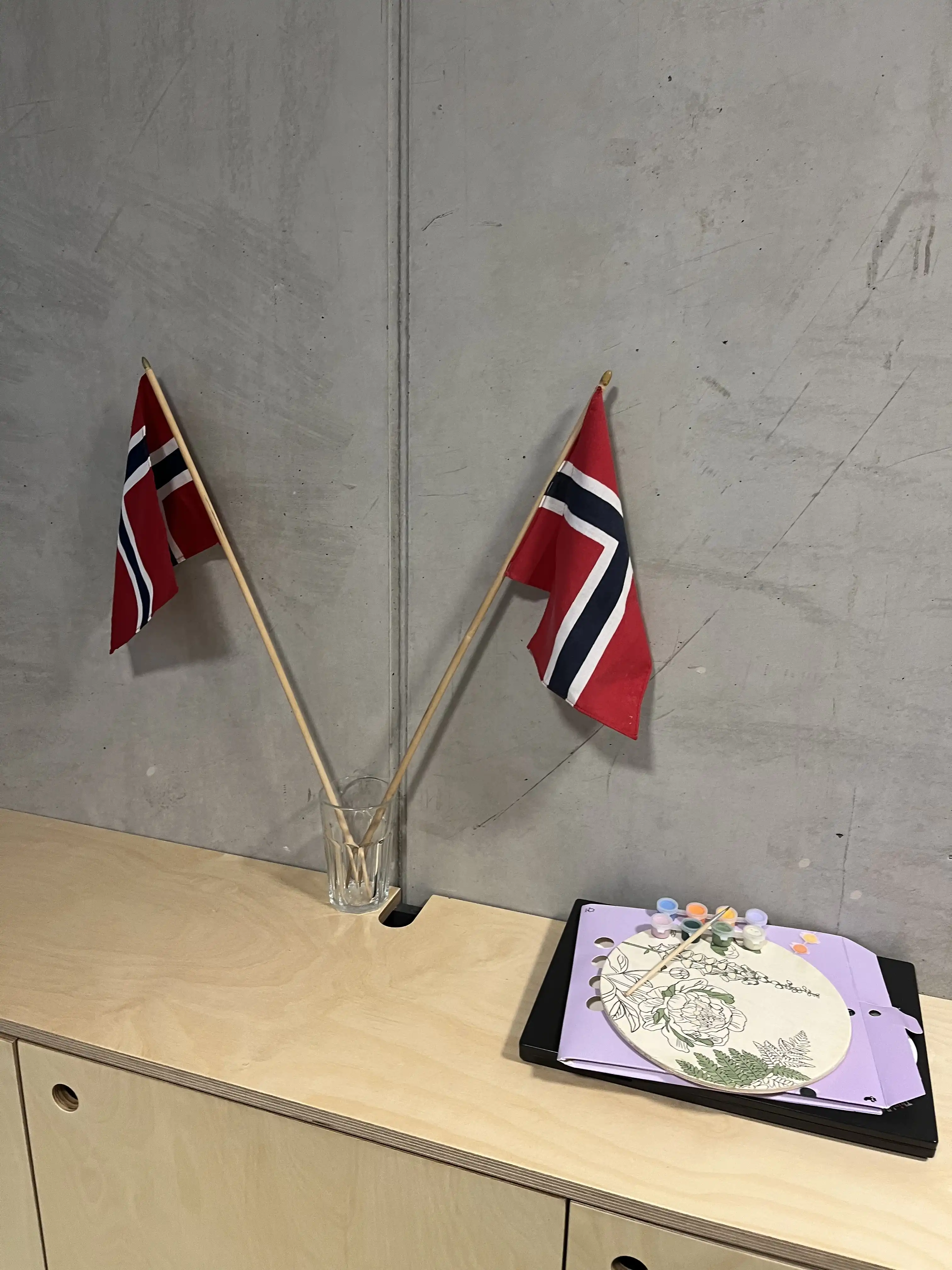
My first night in the new apartment was a 12-hour slumber, finally releasing the exhaustion of kitchen survival and previous travels. My new flatmates, Frødis and Solvei, became the saviors of my exchange life in Czechia. Solvei studied Regional Development and International Studies like me, while Frødis was in the Faculty of Forestry. After I played them Wu Bai’s Norwegian Forest, our apartment officially took on that name.
Perhaps because they were slightly older and more experienced, they possessed a mature outlook on the world. While I simply sang the song, they could deconstruct and empathize with the lyrics of _Norwegian Forest. Solvei, five years my senior but in the same grade, had previously worked as a florist and served two years in the military. She loved decorating; she transformed our industrial apartment into an elegant, cozy home with plants and wall decor. We often ate and chatted in the living room, covering everything from military service and cultural differences to our shared disdain for Trump and Musk.
I remember once, Solvei and I were both headed to meetings, but our conversation grew so deep that we canceled our plans just to keep talking. We critiqued the Russia-Ukraine war and the discriminatory rhetoric of global right-wing leaders, agreeing they were the architects of modern chaos.
We did find points of divergence when debating crime and education. I argued from a perspective of probability: as long as a standardized “system” exists, some individuals will inevitably be “dropped” or failed by society. Solvei, however, believed that any act of violence was a sign of an incomplete society—not a failure of the individual, but a fault of the system. We stood on the same ground, yet I was the pessimist while she was the optimistic problem-solver.
Norway is a bastion of leftist social equity. Having experienced poverty as a nation before the 1969 oil boom, the people remember hardship and prioritize social equality. Solvei shared the story of the 2011 Utøya Massacre, where a right-wing extremist killed 77 people. Despite the horror, society did not descend into hatred. Then-Prime Minister Jens Stoltenberg famously declared: “We will respond to this attack with more democracy, more openness, and more humanity.”
Where I saw the inevitability of crime, Solvei chose a proactive interpretation. In Taiwan, similar tragedies often leave us with a sense of helplessness and emotional reactivity. But she believed the system could constantly evolve until no one is “dropped”. From her, I learned the wisdom of the Norwegians—their hope and optimism. This influence remains with me today, a belief that this is the true path toward well-being. Norwegian Wood represents the secrets hidden deep in the heart, yet it also embodies the forest’s absolute tolerance for everything.