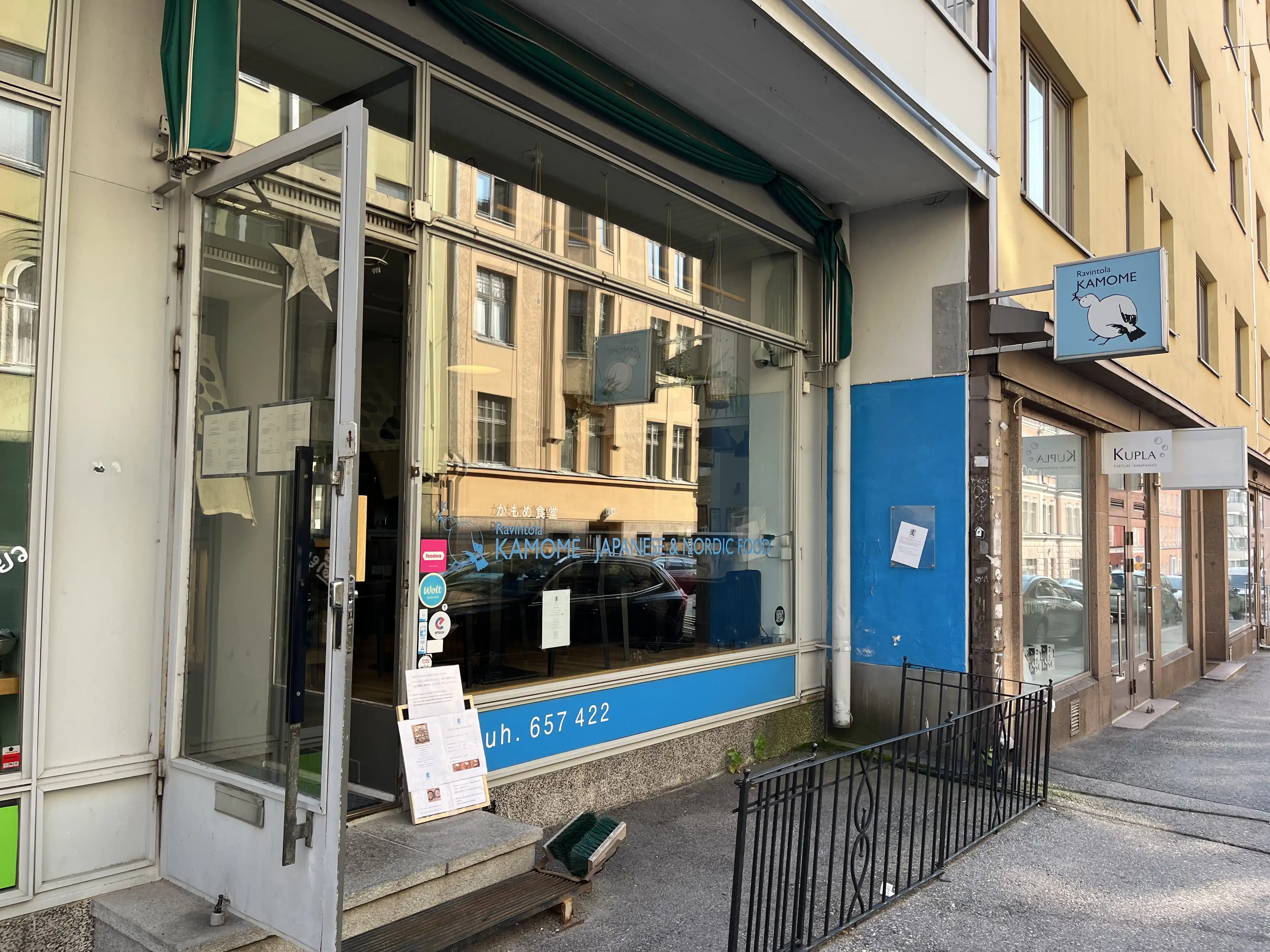
EP 9. Kamome Diner: Our Reasons for Being in Helsinki
Kamome Diner: Searching for a “Reason” in a Foreign Land
After trekking an hour to the harbor the day before, wandering through two islands on Suomenlinna, and another hour’s walk back, exhaustion had finally begun to set in. So, upon waking up, I decided to stay in bed and re-watch Kamome Diner.
The film tells the story of three Japanese women who, through a series of coincidences, find their roots in Helsinki. Sachie arrives alone, seeking a place that resonates with her soul. Midori, a whimsical spirit, simply wants to escape her past life; she points blindly at a map and happens to land on Finland. Masako, after years of caregiving for her parents, heads for the Finnish forests but gets stranded in Helsinki when the airport loses her luggage.
Carrying the lingering warmth of the movie, I visited the real-life “Kamome Diner.” The interior layout no longer resembles the film sets, and the menu has diversified far beyond the original onigiri (rice balls)—in fact, they aren’t even served anymore. Sitting in a quiet corner, eating a beef donburi, I wondered: if I were a character in the movie, what would be my reason for being here? Knowing next to nothing about Helsinki or Finland, I still couldn’t find an answer.
Wandering the “Backbone” of Suomenlinna’s Ruins
Armed with my transport pass, I boarded the ferry to Suomenlinna once again. Unlike the two main islands with their well-preserved ports and monuments, the remaining islands feel like the fortress’s “backbone.” Here, you find massive shipyards and grassy football pitches where children play—evidence of the few locals who still call these islands home.
On the main islands, the paths are lined with people sunbathing and picnicking; I even spotted a group of Chinese students taking graduation photos by the sea. I felt that I belonged more on these fringe islands. At sunset, I aimed a cannon at the sky, using the solar overexposure to simulate a bursting shell—a moment of self-amusement that felt far better than being lonely in a crowd.
Finland is home to the famous Air Guitar World Championships, which boasts a brilliant motto: “If you are playing the air guitar, you can’t hold a gun." Finns believe that if everyone in the world played air guitar, war would vanish. Perhaps I’ve been infected by their sense of the absurd; as I aimed that cannon at the sky, my melancholy found an exit, replaced by a simple, ignorant joy. If everyone could just enjoy the sky and vent their negative energy, perhaps there would be a little more kindness between us.
Sibelius Monument: A Survival Monologue Beneath a Forest of Steel
On the eve of my departure, I visited the Sibelius Monument. This “steel forest,” composed of over 600 stainless steel pipes, uses abstract lines to simulate the grandeur and coldness of a symphony. The faint vibrations caused by the breeze through the pipes feel like the composer whispering to the nation’s soul. Beside this elegance, members of the Falun Gong stood quietly, telling their stories of oppression.
They crossed oceans to escape persecution, promoting their core values of “Truthfulness, Compassion, and Forbearance” in the Nordic wind. Looking at them, and recalling the Chinese student and African friends from the hostel, I realized they are perhaps more like Sachie—they know exactly what they want, which is why they came to Finland to take root in this relatively free land.
As for me, I am perhaps more like Midori. The traveler who arrives without a reason, wandering aimlessly, yet cherishing every chance encounter. To me, everything before my eyes is the ultimate stroke of luck. Through these journeys, I have found the confidence to pursue an ideal life and found others who, like me, are chasing freedom. Our motives and circumstances differ, but we have all found our own meaning here.