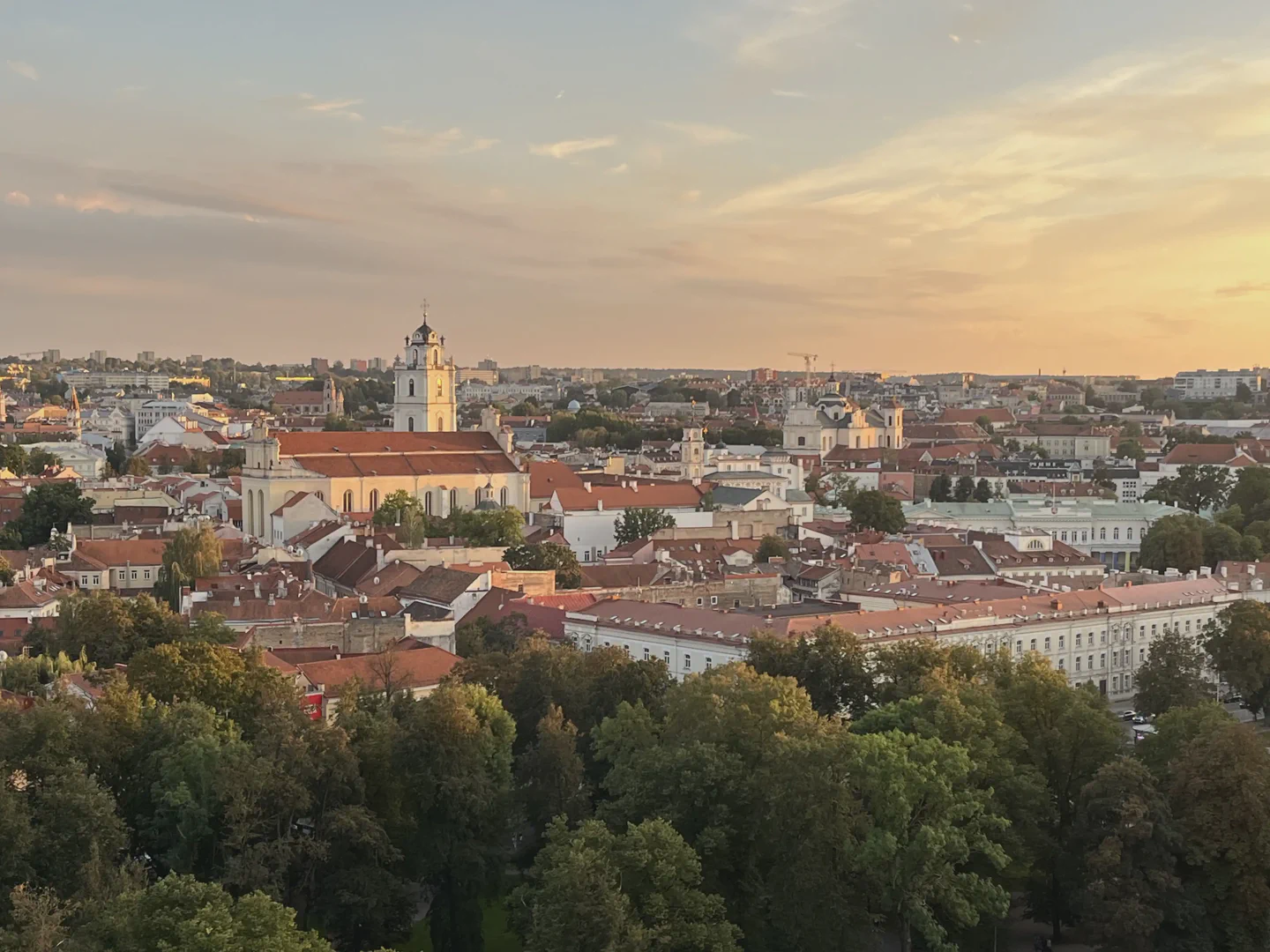
Lithuania’s Hidden Gem: A Solo Traveler’s Guide to Enchanting Vilnius
Solo Travel Index: ⭐⭐⭐⭐⭐
Vilnius is often called the “Starter Village” for solo travelers. The Old Town is compact and entirely walkable, meaning you won’t need complex transport or carpooling. It’s solo-friendly partly because the quiet, slightly “boring” pace of the city actually makes it perfect for wandering and exploring at your own rhythm—a group might just end up being bored together! While locals can seem cold or stare with curiosity (probably just wondering why you’re there), the city is generally safe. Aside from a rare drunkard in the square, there are far fewer homeless people or drug addicts compared to other European capitals.
Budget Travel Index: ⭐⭐⭐
European prices are never truly “friendly,” and Vilnius is no exception. However, there aren’t many places to splurge, and most scenic viewpoints are free. If you love history, local life, and the “Old Town” vibe, it’s worth every penny.
Essential Information
Vilnius is a city filled with Baroque charm and fairy-tale scenery. It is not a typical “tourist city,” which keeps the crowds thin and the atmosphere authentic.
Entry: Lithuania is part of the Schengen Area; holders of a Taiwan passport can enter visa-free.
Best Time to Visit: June to August. Days are incredibly long and the weather is mild (15-25°C). Avoid winter unless you enjoy extreme cold.
Voltage: Standard European round-pin plug.
Payments: Credit cards are widely accepted almost everywhere.
Vibe: The Old Town is packed with churches, historic sites, and beautiful streets. It lacks heavy commercial entertainment, so the joy here lies in the “slow life”—walking, observing, and photography.
Must-Visit Attractions
All Saints Church: A masterpiece of Baroque architecture with a striking pink-orange facade. During WWII, its monks used the crypts as secret passages to help Jews escape the nearby Ghetto, adding a layer of humanitarian depth to its sacred walls.
Gates of Dawn: The only surviving gate of the original defensive wall. It houses the “Black Madonna,” a sacred icon of the Virgin Mary famous for its “miracles.” It remains a spiritual heart for both Lithuanian and Polish pilgrims.
Bastion of the Vilnius Defensive Wall: A majestic 17th-century fortification. Today, it serves as a military museum and the ultimate viewpoint to overlook the sea of Baroque red roofs.
Town Hall Square: The pulse of the city since the 14th century. Once a place of execution, it is now the hub for cultural celebrations and local life.
Užupis Bridge & Angel: The gateway to the “Republic of Užupis,” a self-declared independent district for artists. Don’t miss the bronze mermaid under the bridge and the Angel statue in the square, symbolizing the artistic awakening and freedom of speech.
St. Anne’s Church: Built with 33 different shapes of red bricks. Legend says Napoleon was so captivated by its beauty that he wanted to take it back to Paris in the palm of his hand.
Vilnius University Library: Founded in 1570, it is the oldest in the Baltics. The Smuglevičius Hall, with its astronomical frescoes, is a visual feast for any intellectual wanderer.
Vilnius Cathedral: Standing on the site of an ancient pagan temple to Perkūnas (the God of Thunder), this white cathedral is the soul of Lithuania and the finish line of the historic “Baltic Way” human chain.
Palace of the Grand Dukes: Once the political heart of the Polish-Lithuanian Commonwealth, it was razed by Tsarist Russia and rebuilt in the 21st century as a symbol of Lithuania’s national rebirth.
Top Viewpoints
Gediminas Tower: The symbol of Lithuania. Sitting atop a hill, it offers the most iconic view of the city and represents the nation’s long struggle for freedom.
Three Crosses: A solemn monument overlooking the Old Town. It commemorates martyred monks and serves as a testament to the resilience of Lithuanian faith after being destroyed and rebuilt across different regimes.
Local Food & Recommendations
Pleassurie Uptown: A random find where I had an incredible blueberry crumble bread.
Bazilijonai: Great for trying local “Meatballs” and the famous Pink Cold Soup for the first time.
Awokado Wok & Sushi: Recommended by locals. I had a “Salmon Sushi Dog” for €13.9, which is quite a bargain by European standards.
Lithuanian Specialties:
Cepelinai: The national dish—heavy potato dumplings shaped like zeppelins, stuffed with meat and topped with sour cream and bacon.
Šaltibarščiai (Pink Cold Soup): A refreshing, bright pink soup made of beets and kefir. A summer must-try!
Kepta Duona: Fried rye bread with garlic and cheese sauce. The best companion for local craft beer.
Šakotis (Tree Cake): A traditional spit cake that looks like a pine tree, often served at weddings and celebrations.
Practical Tips
Transport: The city is small enough to explore on foot. Download Bolt for ride-hailing or to rent electric scooters/bikes for longer distances.
Accommodation: I stayed at Hostel Jamaika @ Shopen, about 8 minutes from the station. Rates were roughly €15 (weekdays) to €20 (weekends).
Beyond Vilnius: If you have time, visit the Hill of Crosses (a symbol of national defiance), Trakai Island Castle (a stunning red-brick water castle), or Kaunas (the vibrant second city with Art Deco architecture).
Special Festivals
Kaziukas Fair (March): The largest traditional craft market.
Užupis Independence Day (April 1st): A satirical celebration where the fountain flows with beer.
Capital Days (Late Aug/Early Sept): A 3-day music festival. I personally love Lithuanian music—it’s natural, relaxing, and surprisingly rocking!